Stakeholders warn improved TB data is not translating into action
By: Aphelele Buqwana
Stakeholders at the TB Accountability Consortium (TBAC) fifth annual convening have warned that while South Africa’s TB data systems have improved significantly, the country risks falling short of its elimination targets if data is not translated into concrete action.
The convening has become an annual feature for TBAC in recent years, serving as a space where policymakers, researchers, civil society organisations, TB champions and community advocates come together to reflect on the state of the country’s TB response. It provides an opportunity to reflect on progress made, address persistent systemic challenges that continue to hinder efforts to end TB and recognise the leadership and innovation developing across communities and the broader health sector.
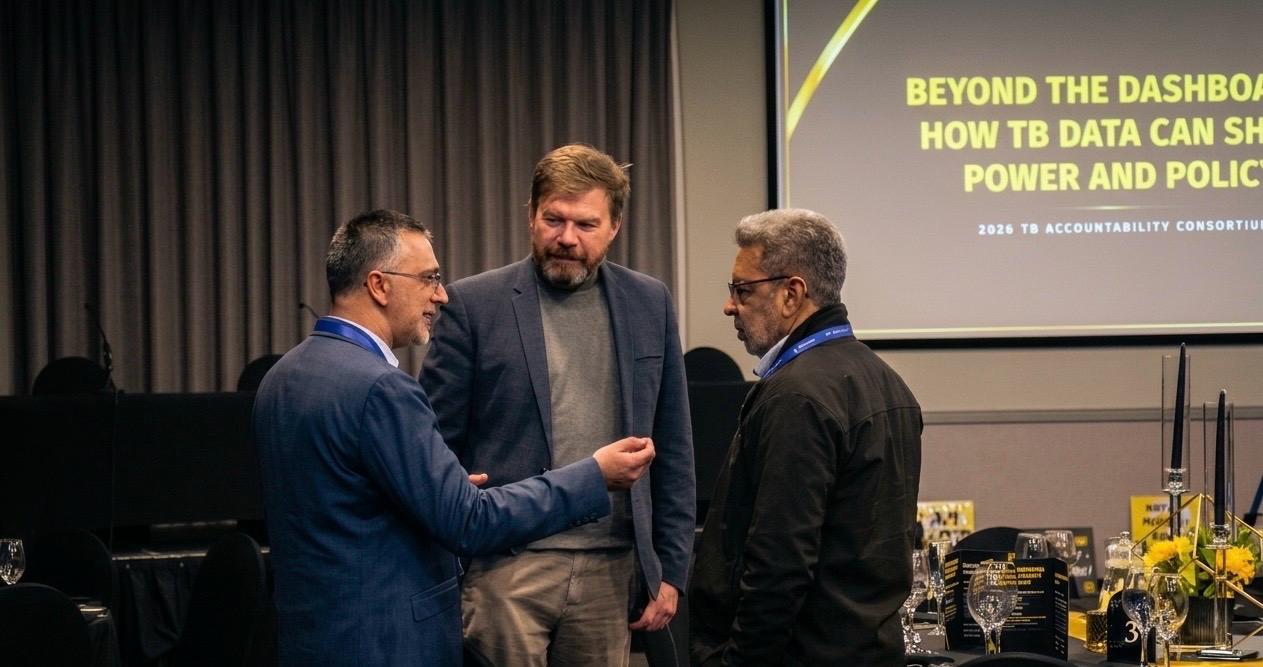
This year’s convening was held under the theme “Beyond the Dashboard: How TB data can shift power and policy”,bringing together policymakers, researchers and civil society to reflect on how TB data is shaping accountability and decision-making in the fight against the disease.
With a keynote address by Prof. Norbert Ndjeka, Chief Director of TB Control and Management at the National Department of Health and a panel discussion which included Dr Nkhensani Nkwashu, Executive Manager for the National Strategic Plan for HIV, TB and STIs Implementation at SANAC, Dr Fareed Abdullah, Director of the Office of AIDS and TB Research at the South African Medical Research Council, and Dr Luvuyo Bayeni, Chief Director of Human Resources at the National Department of Health, the convening focused on how data can be translated into action to strengthen TB outcomes.
The convening was at the centre of TBAC’s fifth State of TB in South Africa report, released this year, which draws on data from the End TB public-facing dashboard and focused largely on the role of data in efforts to end TB.
Speakers repeatedly emphasised that while the country’s TB data systems have improved significantly in recent years, thousands of people affected by the disease are still being missed, contributing to the ongoing transmission and undermining progress towards the elimination.
Prof. Ndjeka, said the End TB public-facing dashboard has strengthened transparency and improved visibility across the TB response, allowing both officials and communities to track testing and diagnosis in near real time.
“The primary purpose of the dashboard is transparency, enabling everyone, including communities, to see where TB testing is taking place and where gaps remain,” Ndjeka noted.
He said the dashboard has already contributed to increased testing and improved identification of gaps in case finding, including disparities such as lower testing rates among men despite the group having higher diagnosis rates.
Ndjeka, however, warned that South Africa continues to miss tens of thousands of people with TB each year, “a gap that continues to drive transmission and undermine progress in reducing incidence”, he said.
“Data alone do not save lives but action does,” he stated.
He added that while TB data has become a powerful tool for accountability, the challenge now lies in ensuring it is used to inform decisions and strengthen health system responses.
During the panel discussion, Dr Nkhensani Nkwashu noted that TB data has helped clarify accountability and identify areas that require policy and implementation changes.
“Current TB data has helped us understand who is accountable in the overall response, what needs to be done, and where policies need to be strengthened to achieve targets,” she said.
Nkwashu, however, stressed that data alone is not sufficient to explain persistent gaps in the TB response.
“Data alone does not tell us why people are still being missed and it does not fully show the social as well as structural barriers that affect access to care,” Nkwashu said.
She said some gaps, including loss to follow-up -where patients start treatment but stop coming to clinics and are subsequently lost from care- occur within the health system itself and require closer attention beyond numerical tracking.
Dr Fareed Abdullah also pointed to the major challenges that continue to undermine gains made over the years.
He warned that although the country has recorded declining TB incidence, improved diagnostic tools and innovative treatment approaches, people with TB are still being missed each year.
“South Africa has made remarkable progress in the fight against TB, with declining incidence, improved diagnostics and innovative treatment approaches. Yet major challenges remain of thousands of people with TB still missed each year, treatment outcomes remain suboptimal and health system weaknesses continue to undermine progress,” he said.
Abdullah added that in a period of tighter fiscal constraints, stronger integration of TB, HIV and primary healthcare services will be essential to improve efficiency, strengthen accountability and improve patient outcomes.
Dr Luvuyo Bayeni, stated that the health system needs stronger human resource information systems to improve planning, coordination and service delivery.
“We were looking at just one skill set and only to find that we could do better when we have a different skills mix and redistribute accordingly,” he said.
He said improved data systems should allow the health sector to accurately track healthcare workers, their registration status, location and skills.
“If I say I’m a healthcare worker, that should be enough and the system must tell me where I am, what category I fall under, whether I am registered as well as whether I am up to date,” he noted.
Questions from the floor and wider discussion broadened the debate to include housing constraints, social determinants of health and the need for more efficient TB tracking systems, as well as persistent gaps in reaching men.
Dr Barry Kistnasamy, Head of Occupational Health at the National Department of Health, raised concerns about men, a group that is often not being reached through routine health services, and questioned whether workplaces are being fully utilised as entry points for TB screening.
He pointed to the scale of the working population as an opportunity for expanded TB interventions.
“The workplace is where 15 million people in formal employment go every day, and there are another seven million in the informal economy,” Barry said. “If we look at industries like mining and automotive manufacturing, up to 80% of workers are men. We can reach them there through occupational health programmes.”
Barry said workplace-based screening could help improve TB detection and close gaps in testing among men, adding that ccupational health systems should be better integrated into the broader TB response to ensure that missed populations are reached.
Throughout the convening, speakers returned to a common message, emphasising that while South Africa’s TB data systems have improved transparency and accountability, ending TB will depend on how effectively that data is translated into action within the health system.