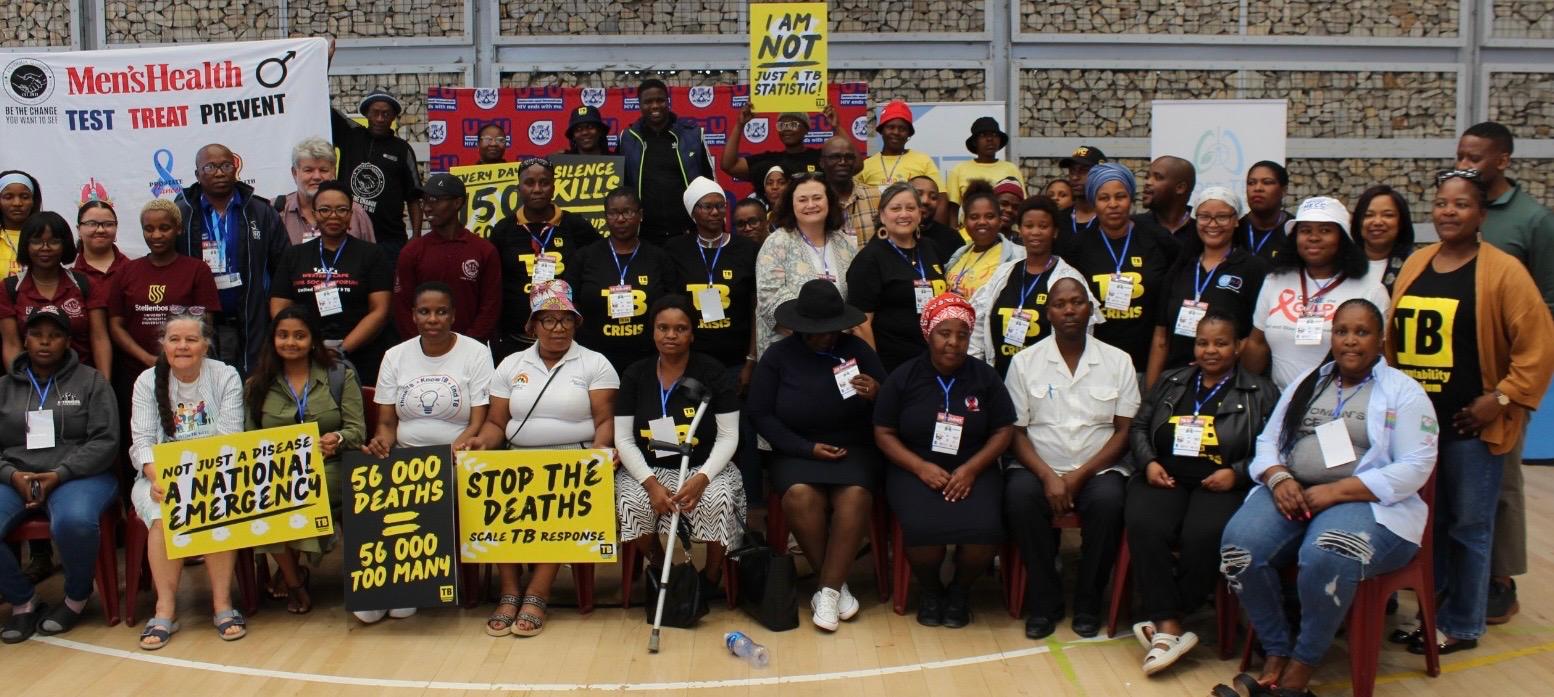
Men are still falling through the cracks in South Africa’s TB response
By: Aphelele Buqwana
Men in South Africa remain disproportionately burdened by tuberculosis (TB), with studies showing that they are 70% more likely to develop TB and die from it compared to women.
This alarming reality took center stage of the conversation at the Western Cape TB Summit, where community members and health experts raised concerns that men are still not being adequately reached, informed or supported in the province’s fight against TB.
According to the newly launched End TB Campaign public facing dashboard by the National Department of Health, more than 4 000 men aged between 35–44 in the Western Cape have tested positive for TB in 2025, compared to over 2 000 women in the same age group.
The summit, held at Thusong Hall in Khayelitsha, brought together TB survivors, researchers, civil society organisations and government officials to strengthen partnerships and accelerate the province’s efforts to tackle TB.
While the event highlighted improvements in testing and treatment, with many districts showing steady progress, the need to better engage men in TB prevention, diagnosis and care was a recurring theme throughout the discussions.
Community representatives argued that despite national strategies being implemented, men continue to be left out of TB education and outreach efforts.
Lumkile Sizila, founder of Amadoda Qotho, a Khayelitsha-based organisation working with men, said men still lack accurate information about TB symptoms, testing, treatment as well as access to healthcare facilities.
“Men need to be reached with accurate information on symptoms, testing, treatment and where to access care,” he said.
He further stated that this gap contributes to delayed diagnosis and poorer health outcomes not only among men but also their families and communities.
“Without this inclusion, they risk being left out of prevention, early diagnosis and treatment initiatives, which can affect not only their health but also their families and communities.”
Mzingisi Nake, a professional nurse and researcher at the University of Cape Town, noted that men often do not visit clinics regularly which leads to delayed diagnosis and treatment. He, however, urged the government to make healthcare services more accessible to men by extending clinic hours to accommodate those who work during the day.
“Increasing clinic hours, especially in TB clinics, would allow more men to access care even after work,” he said.
Nake also stressed the importance of addressing HIV and TB co-infection, noting that people should test for both when seeking care. “HIV and TB go together. It’s important to test for both. It’s possible that when someone has TB, they infect everyone in the household. That should not be the case. TB is preventable and curable, so people must take responsibility and take care of themselves,” he added.
Speaking on the success of the event as the first of its kind, Neliswa Nkwali, chairperson of the SANAC Civil Society Forum in the province, noted that the summit showed the importance of hearing from TB survivors and the community as well as the role of research in guiding the TB response.
“It was a great initiative because it provided an opportunity to understand how survivors feel post-treatment,” she said. “Researchers presented their studies, making sure the community knows about the research, how it works and how it can help.”
She also emphasised the need to build on the summit’s outcomes. “This was just the start. From the evaluation, we will have more insight into what needs to be improved for future events and ensure that the work continues,” she stated.
Stressing on the importance of taking the discussions back to communities, Nkwali further added that the conversations must not end at the summit.
“We need to take the discussions back to communities by having community dialogues and then bring that information forward so it can guide the next steps,” she stressed.