Healthcare funding under scrutiny as stakeholders call for greater investment in public health services
By Palesa Chidi
South African health, education and social justice advocates have raised concerns about healthcare funding and the growing pressure on public health services. They warned that budget allocations must translate into improved access to healthcare, particularly for rural and vulnerable communities.
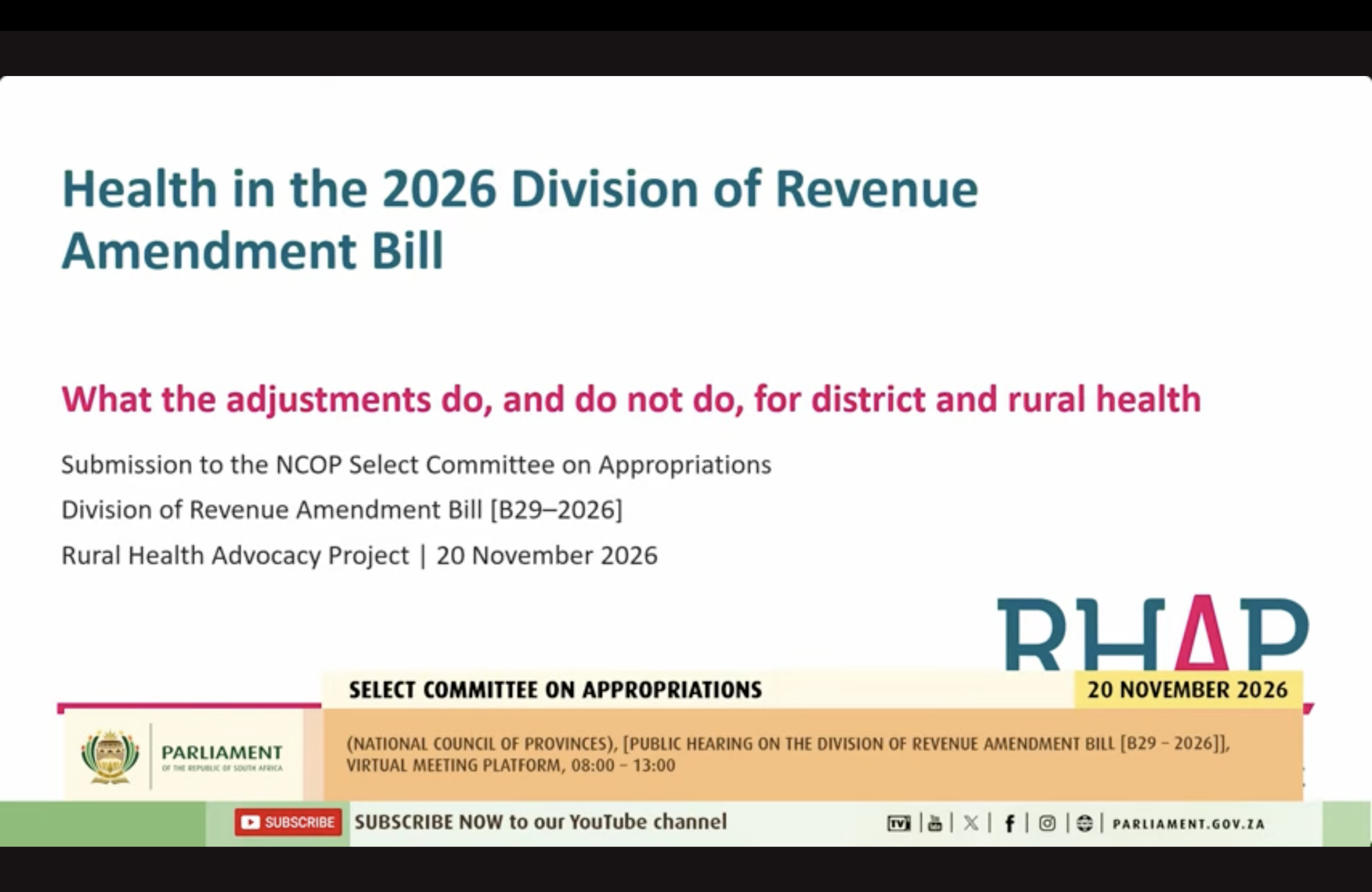
The organisations presented their submissions during the NCOP Select Committee on Appropriations’ public hearings on the 2026 Division of Revenue Amendment Bill, where civil society organisations, researchers and community representatives discussed the impact of government spending decisions on service delivery.
The Rural Health Advocacy Project (RHAP) was among the organisations that made submissions, highlighting concerns about whether current budget allocations are sufficient to meet the country’s growing healthcare needs and whether funding is reaching the communities that need it most.
Presenting on behalf of RHAP, Executive Director Russell Rensburg highlighted that provincial health departments are facing approximately R48 billion in unpaid invoices. He explained that healthcare budgets have not kept pace with inflation or population growth, leaving provinces under increasing pressure.
RHAP noted that the Amendment Bill provides R275 million for disaster repairs and R156.6 million through a rollover for hospital infrastructure. However, there are no adjustments to the district health services conditional grant, which supports programmes including HIV and TB services.
The additional R20.5 billion allocated to provincial equitable shares over the medium term also raised concerns. Since this is an unconditional transfer, it remains unclear how much will reach healthcare. RHAP called for provinces to account for how this funding is distributed, particularly given the pressures facing district health services.
For rural communities, these budget decisions have direct consequences. Local clinics are often the first point of access to healthcare, yet inadequate funding and staffing can leave people travelling long distances to receive care. RHAP stressed that district-level services must remain a priority in health spending.
The submission also highlighted gaps in NCD care. Approximately five million people in South Africa are living with diabetes, but only around one million are receiving treatment. Although screening takes place at district level, there are gaps in linking patients to ongoing care. This raises concerns about whether the health system can respond effectively to the growing burden of chronic disease.
TB was another major focus. Rensburg noted that the disease continues to claim close to 56,000 lives annually in South Africa, despite being preventable and treatable. He called for improved access to point-of-care testing, which could bring diagnosis closer to communities and allow patients to begin treatment sooner.
He also highlighted the potential introduction of a new TB vaccine for adolescents aged 14 and older, as well as adults, within the next year or two. However, he warned that without advance budget planning, populations most at risk may not benefit from this development.
During the engagement, an Honourable Member also questioned how HIV and TB programmes would be funded following changes in external assistance. The Member asked what funding information National Treasury and the Department of Health should provide, whether provincial budgets adequately cover treatment and district services, and how Parliament should address underperformance against TB treatment targets.
The exchange reinforced the need for accountability and sustainable funding for TB programmes.
RHAP called for stronger parliamentary oversight of provincial health budgets, including clarity on how additional funding will support healthcare. The Committee indicated that submissions would be considered in its findings and recommendations.
Watch the full submissions here: https://www.youtube.com/live/K8LF1_BHsl4