Gauteng TB Caucus joins global HIV and TB discussions at AIDS 2026
By: Aphelele Buqwana
The fight against HIV and TB extends beyond clinics and treatment programmes. Strong political leadership, sustained funding and effective parliamentary oversight are also needed to ensure that health policies translate into services that reach the people who need them.
These issues were central to discussions at the 26th International AIDS Conference (AIDS 2026) in Rio de Janeiro, Brazil, where global health experts, policymakers, researchers, healthcare professionals and communities reflected on the future of the HIV response and its links to other health challenges.
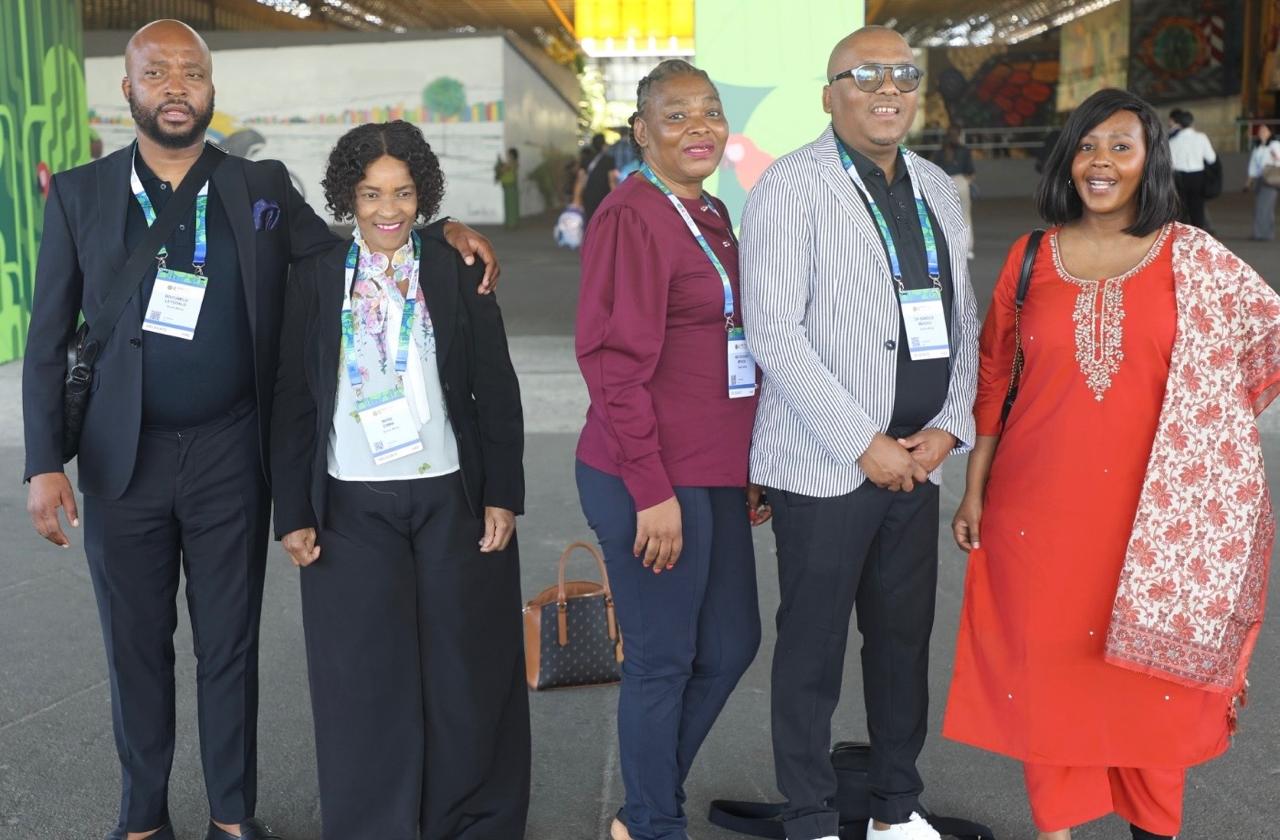
The Gauteng Provincial Legislature’s TB Caucus joined the conference from 26 to 31 July 2026, using the global platform to engage with discussions on HIV, TB, health systems and the role of parliamentary oversight in improving health outcomes.
Held under the theme “Rethink. Rebuild. Rise.”, AIDS 2026 focused on the global HIV response, including scientific advances, prevention, human rights, sustainable financing and access to healthcare.
The discussions are particularly relevant to South Africa, where HIV and TB remain closely linked. In the country, 54% of people diagnosed with TB are living with HIV, showing the need for the two diseases to be addressed together. South Africa is also among the countries with a high burden of HIV-associated TB globally.
The TB Accountability Consortium (TBAC) sat down with Dr Bandile Masuku, Chairperson of the Gauteng Provincial Legislature’s TB Caucus, to discuss the conference, the issues raised around HIV and TB, and how these discussions can inform the caucus’s parliamentary oversight work in Gauteng.
Masuku said the conference provided an opportunity to engage with global experts, policymakers and parliamentarians while deepening the caucus’s understanding of the interventions needed to address TB and HIV.
“The conference provided an important platform to engage with global experts, policymakers and parliamentarians, share oversight experiences, and deepen our understanding of the interventions required to eradicate both TB and HIV.”
He added that the discussions reinforced the importance of strong legislative oversight in ensuring that health programmes deliver results and that advances in science translate into improved access to healthcare.
The relationship between HIV and TB was also a key part of the discussions, with Masuku stressing the need for the two diseases to be addressed together.
“A key lesson was that HIV and TB must be addressed together, as TB remains one of the leading causes of death among people living with HIV.”
Delegates also discussed new approaches to HIV and TB treatment, including long-acting therapies. Masuku said such advances would need to reach the communities that need them, while strong health systems, sustainable financing and equitable access to healthcare remain central to the response.
He further pointed to the need for government to look beyond the health department when responding to TB.
“The conference reinforced the need for a whole-of-government approach. TB is influenced by factors such as housing, education, poverty and social conditions, so oversight must extend beyond the health sector.”
This approach will inform the Gauteng TB Caucus’s oversight work, with Masuku outlining plans to develop an oversight matrix covering departments including Health, Human Settlements, Education, Social Development and Treasury.
The matrix will allow departments to account for their commitments and give the caucus a framework to monitor whether government programmes are improving access to TB and HIV services.
Masuku further called for parliamentarians to strengthen oversight of TB and HIV programmes, protect funding for prevention and treatment, and address the social conditions that contribute to disease.
“The eradication of TB and HIV is ultimately linked to effective service delivery across government. We must ensure that all departments contribute towards healthier communities and support the implementation of NHI to guarantee equitable access to healthcare services.”
He also linked the response to TB and HIV to wider questions of inclusion and human rights, saying the conference had reinforced the importance of ensuring that people affected by disease are not excluded from healthcare and other services.
“One of the most important messages I took away from the conference is that the politics of inclusion are fundamentally the politics of human rights.”
Masuku noted that medicines and technology alone would not be enough to end HIV and TB, pointing to equality, social justice and access to healthcare as important parts of the response.
He said universal access to healthcare should be viewed as both a health objective and a human rights imperative, linking this to the implementation of National Health Insurance.
“If we are serious about ending HIV and TB, we must ensure that no one is left behind. That means building an inclusive healthcare system, strengthening community participation, protecting human rights and expanding access to quality healthcare for all.”
For Masuku, the discussions in Rio reinforced that ending HIV and TB will require sustained political commitment beyond the health sector. The challenge now is to turn these commitments into action through stronger oversight, accountable government departments and health services that respond to the realities faced by communities.