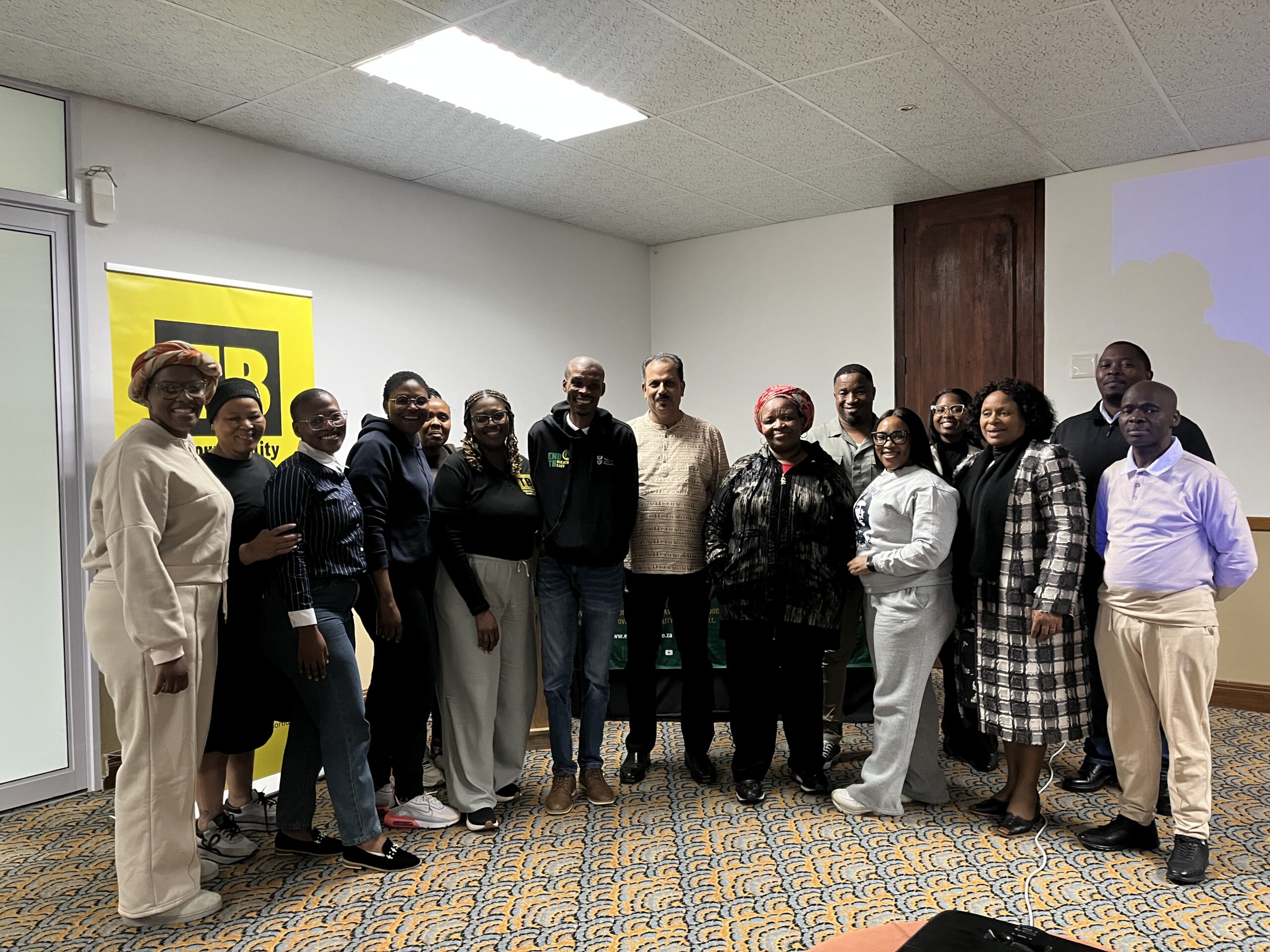
Eastern Cape’s TB Caucus strengthens oversight through TB training
By: Aphelele Buqwana
In the Eastern Cape, the fight against TB does not end when someone walks into a clinic. Finding people with the disease, getting them onto treatment and supporting them to complete it are all part of a longer care journey, with people at risk of being lost at each stage.
For the province’s TB Caucus, understanding these gaps is becoming an important part of its role in overseeing the TB response.
These issues were at the centre of a Basic TB Management Training Programme hosted by the Eastern Cape Department of Health, Eastern Cape Legislature and Eastern Cape AIDS Council, with support from the TB Accountability Consortium (TBAC) and Aquity Innovations.
The training created space for Eastern Cape legislators, government departments, ex- mine workers and civil society organisations to strengthen their understanding of TB and consider how the province’s TB response can be better monitored through legislative oversight.
TB requires a response beyond health services
Opening the training, Kesava Pillai Anilkumar, Member of Parliament in the Eastern Cape, said the province’s TB burden cannot be addressed through medical interventions alone, particularly as social and economic conditions continue to shape people’s vulnerability to the disease.
“There are a lot of issues of malnutrition, hunger, inadequate ventilation and the conditions in which people live. All these are challenges mean we need all departments to work together – housing, social development and economic growth – because this is not only a health issue,” he said, emphasising that the conditions people live in can affect their risk of getting TB and their ability to access services and remain linked to care.
Pillai noted that addressing these challenges requires a coordinated government response, with departments considering how their areas of responsibility can contribute to reducing the conditions that increase people’s vulnerability to TB.
He further explained that this also means the response cannot rest with the health department alone.
“Health cannot solve all these problems on its own. We need all the departments to come together and work towards addressing these issues, because the conditions in which people live are also contributing to the TB problem,” he said.
His comments placed the caucus’s oversight role within a broader government response, where progress on TB also depends on what happens in areas such as housing, social development and economic opportunities.
Strengthening the TB Caucus’s role
Advocate Koleka Beja, Executive Manager of Legal & Procedural Services at the Eastern Cape Provincial Legislature, presented a review of the TB Caucus’s Annual Plan, outlining the activities planned to strengthen the caucus’s role in monitoring the province’s TB response.
The plan includes training members and staff, conducting oversight visits to TB hospitals, raising awareness about TB and strengthening engagement with the provincial health department. It also makes provision for engagement with ex-mineworkers on TB and the impact of government support programmes, recognising the need for the caucus to engage with communities and groups affected by TB beyond health facilities.
“We need to make sure that the work of the TB caucus goes beyond meetings. The Annual Plan gives us a way to structure our work, follow up on issues affecting people with TB and ensure that the concerns we identify are taken forward through the Legislature,” Beja said.
She further explained that the plan supports the caucus’s broader legislative oversight responsibilities, including engaging government departments, conducting follow-ups and ensuring that issues affecting communities are brought to the attention of the Legislature.
Finding TB and supporting people through treatment
Presentations by Khaya Matiso and Nobathathu Ntutumbo from Aquity Innovations covered different aspects of the TB care journey, from recognising symptoms and identifying people for testing to supporting patients through treatment.
Matiso discussed common TB symptoms in adults and children and stressed that testing should not only focus on people with symptoms.
“We prioritise certain groups for testing, regardless of whether they have signs and symptoms,” he said, referring to people living with HIV, pregnant women, household contacts of people with TB and people previously treated for TB.
He also urged participants to act when children show possible signs of TB. “If you see your child or any child in the community with these signs, advise the mother or caregiver of the child to take the child to the clinic for testing for TB,” added.
Ntutumbo focused on supporting people after diagnosis, including explaining possible treatment side effects and addressing stigma through community education. She also emphasised working with traditional leaders and traditional healers to help people who seek traditional care reach health facilities when needed.
Using data to strengthen oversight
At the end of the training, Zimbini Madikiza-Mgayi, Policy and Advocacy Officer at TBAC, used the national TB dashboard to show the Eastern Cape’s performance across the early stages of the TB care pathway, particularly testing and case detection.
The dashboard does not yet show the full journey from testing through to treatment completion, meaning there are points where people may be lost after testing, diagnosis or treatment initiation without data showing exactly where that happens.
“This gives the TB Caucus an early warning measure. It allows oversight to begin before the end of the treatment care cascade, so we can ask whether people are getting onto treatment and whether they are finishing their treatment,” Madikiza said.
The figures presented showed that the Eastern Cape detected 35,134 TB cases against a notification target of 38,582, leaving a gap of 3,448 cases. The province also reached 8% of its assigned testing target.
But when the numbers are considered against the size of the population, the picture is more complicated. The province conducted about 6,352 TB tests for every 100,000 people, meaning about 64 tests for every 1,000 people in the province, compared with about 49 tests for every 1,000 people nationally.
Madikiza-Mgayi said the data should prompt questions about who is being reached through TB testing.
“The findings should lead to two questions. Are we testing enough people? And are we testing the people and communities where TB is most likely to be found?”
She said these questions are important for the TB caucus as it uses data to identify differences between districts and investigate issues such as access to diagnostic services, community outreach, transport and referral systems.
The data also shows differences in who is being reached. According to the dashboard, about 93 men were tested for every 100 women in the Eastern Cape, yet TB was detected more often among men. A total of 658 cases were recorded for every 100,000 men tested, compared with 365 cases among women tested.
For the TB caucus, the data provides a starting point for asking what is happening beyond the numbers and whether current approaches are reaching people who are more likely to have TB.
The training therefore linked clinical knowledge, community-level challenges and data to the caucus’s oversight role. For the province’s legislators, the next step is using this understanding to ask where people are being missed, why they are being missed and whether people diagnosed with TB are being supported to start and complete treatment.